
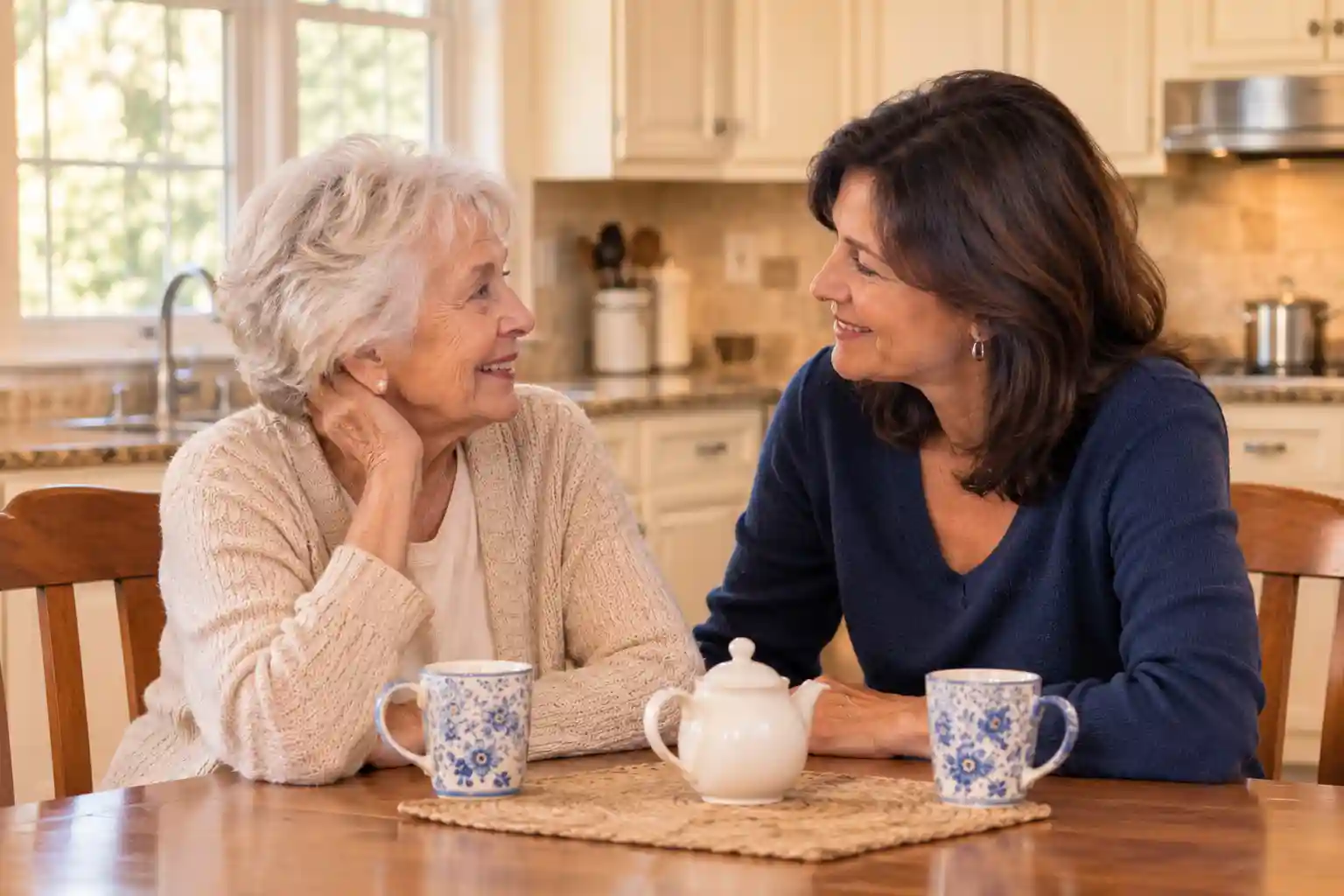
November is National Family Caregivers Month, a time to recognize the millions of people who provide care and support to aging parents, spouses, and loved ones.
But recognition alone isn't enough. We need to talk more openly about what caregiving actually demands of the people providing it.
Family caregiving is often described as an act of love. And it is. But it can also be physically exhausting, emotionally draining, financially challenging, and isolating. It can change family relationships, disrupt careers, and leave caregivers wondering how much longer they can keep going.
As someone in my 60s who is increasingly involved in caring for an aging parent, I understand how quickly occasional assistance can turn into an ongoing responsibility. What once seemed manageable gradually becomes another layer of responsibility added to an already full life.
And I know I'm not alone.
It Happens Gradually
Most families don't anticipate how quickly an aging parent's needs can change. A parent who has managed independently for years begins having difficulty with household tasks, mobility, transportation, or everyday activities.
You step in to help. You take care of something around the house, run an errand, or arrange an appointment. But gradually, the occasional assistance becomes a regular responsibility.
One caregiver, reflecting on four years of caring for his mother, described the experience in a way that captures this transition:
"You're running your own life and trying to run somebody else's."
That is the reality for many family caregivers.
You don't wake up one morning and suddenly become a caregiver. It happens one responsibility at a time, until you realize how much of your life revolves around someone else's needs.
When One Person Carries the Responsibility
In theory, caregiving should be a shared family responsibility. In practice, it often falls disproportionately on one person.
Perhaps one sibling has a demanding career and family commitments. Another lives farther away. The person who is single or self-employed may be perceived as having more flexibility.
But flexibility does not mean unlimited availability.
Your own work, financial obligations, health, and personal life don't disappear because a parent needs help. Yet the responsibility can become an unspoken expectation, leaving one person to manage most of the day-to-day demands.
Being single or self-employed doesn't mean you have unlimited time to take care of someone else. You still have a life, work, and responsibilities of your own.
The Work Nobody Sees
Caregiving involves far more than checking in on a parent or taking them to an occasional doctor's appointment.
It means coordinating medical care, managing medications, arranging transportation, preparing meals, maintaining a household, handling paperwork, and responding when something goes wrong.
It can mean leaving work early, rearranging schedules, and spending evenings and weekends attending to someone else's needs.
There are also the physical demands: lifting, bending, cleaning, moving things, and helping someone whose mobility is declining.
Sometimes you do things yourself because hiring help costs money. But there is a price to doing everything yourself, too. Your own health can suffer.
And here's something we sometimes overlook: The caregiver is aging, too.
Many people caring for their parents are themselves in their 50s, 60s, or 70s. They have their own physical limitations, health concerns, careers, and financial obligations.
An injury to the caregiver can create an entirely new crisis.
The Emotional Toll: Love, Frustration and Guilt
Perhaps the most difficult part of caregiving is the emotional burden.
You can love your parent and still become frustrated. You can lose your patience, speak sharply, or feel resentful about yet another responsibility. Then comes the guilt.
You know your parent is aging. You understand that losing independence is difficult for them, too. But knowing that doesn't make the daily demands any easier.
One caregiver in a story I recently heard spoke candidly about this:
"There's no perfect caregiver. You try very hard and you make mistakes."
That observation deserves more attention.
Caregivers are human beings with their own needs, emotions, and limitations. They cannot be expected to be endlessly patient or endlessly available.
There is also the sadness of watching someone who was once capable and independent gradually become more reliant on you. The relationship changes. You are still the daughter or son, but increasingly you are also the person responsible for making sure everything gets done.
This November, Remember the Caregiver
During National Family Caregivers Month, let's recognize not only the seniors receiving care but also the people making independent living possible.
One caregiver reflecting on his mother said something that stayed with me:
"It will never show up in a resume, what I did for those four years, but they were important."
That is a powerful reminder that caregiving represents years of work, sacrifice, and responsibility that rarely receive the recognition they deserve.
If you are caring for an aging parent or loved one, remember that your health matters, your time matters, and you deserve support.
Caregiving is not for the faint of heart. And no one should have to do it alone.
Insightful Aging Can Help You and Your Family
Whether you are looking for non-medical caregiving assistance, household services, mobility solutions, or other resources to support independent living, insightfulaging.com offers a starting point.
Explore how Insightful Aging can help you or your family