
Guide: Overcoming Dexterity Challenges in Aging
For many older adults, the most difficult part of aging is not dramatic illness—it is the gradual dexterity challenges caused by aging in everyday tasks.
Opening a bottle. Picking up an item. Putting on socks. These small actions begin to require focus, effort, and sometimes assistance.
The fine coordination of muscles in the hands and fingers that allows gripping, pinching, and precise movement begin to deteriorate and decline among seniors.
💡Useful Tip
My mother has difficulty opening many household and bathroom cleaner bottles that require a pinch-and-twist motion. Because of arthritis, she no longer has the grip strength needed for these small but essential tasks.
I researched solutions and found that there is no single tool designed specifically for this type of container. Instead, we had to improvise. I asked her to press one side of the lid against the counter to mimic a pinching grip while using a jar opener pad to twist it open.
Even then, it only worked on larger containers. Smaller bottles, especially bathroom cleaners, remain difficult or impossible for her to open independently.
These are the kinds of daily challenges that rarely get attention, yet they directly affect independence. They are not dramatic moments, but they accumulate—leading to fatigue, frustration, and a growing sense of limitation that others often don’t see.
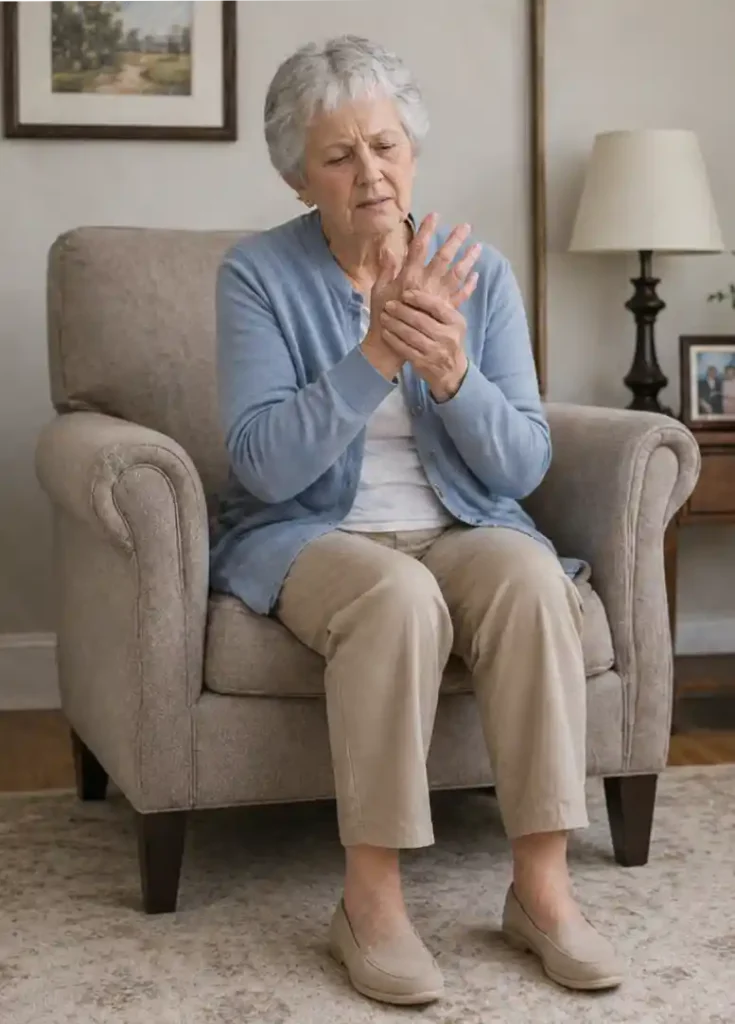
Hands carry memory as much as strength.
Common Cause of Loss of Dexterity
A leading cause of declining hand dexterity in older adults is arthritis, particularly osteoarthritis (OA) and rheumatoid arthritis (RA). These conditions affect the joints in the hands, fingers, and wrists, gradually reducing strength, flexibility, and fine motor control.
My mother has arthritis, and over time it has gradually affected her hands as well as other joints. What began as occasional stiffness has progressed into more consistent limitation in grip strength and finger mobility accompanied by pain and stiffness. Even simple tasks like opening bottles, handling small objects, or using everyday items now require more effort.
👉 Arthritis and Dexterity: What the Data Shows
According to the CDC’s most recent national data (2024 reporting cycle), about 1 in 5 U.S. adults (21%) have doctor-diagnosed arthritis, and prevalence rises sharply with age. Among adults 65 and older, nearly half (about 48%) are affected.
The Arthritis Foundation notes that arthritis is the leading cause of disability in the United States, with osteoarthritis being the most common form. It frequently affects weight-bearing and highly used joints—including the hands, which are essential for gripping, pinching, and fine motor tasks.
How Arthiritis Affects Hand Function
Arthritis in the hands commonly leads to:
-
- Reduced grip strength (opening jars, bottles, containers)
- Loss of fine motor control (phones, typing, picking up small objects)
- Joint stiffness, especially after inactivity
- Pain or difficulty with twisting, picking up and pinching movements
As these changes progress, routine daily activities become less automatic and more physically demanding.
Dexterity Tools & Aids to Support Daily Independence
Many of these challenges can be made easier with practical, thoughtfully designed aids that help older adults continue performing everyday activities with greater confidence and less frustration.
Through my research and personal experience helping my mother find solutions for her own dexterity challenges, I have identified tools that may assist with common tasks such as opening containers, improving grip, reaching items, and managing dressing, hygiene, and other daily activities.
If you or a loved one is experiencing similar challenges, explore my curated recommendations for dexterity aids designed to support independence at home 👇